
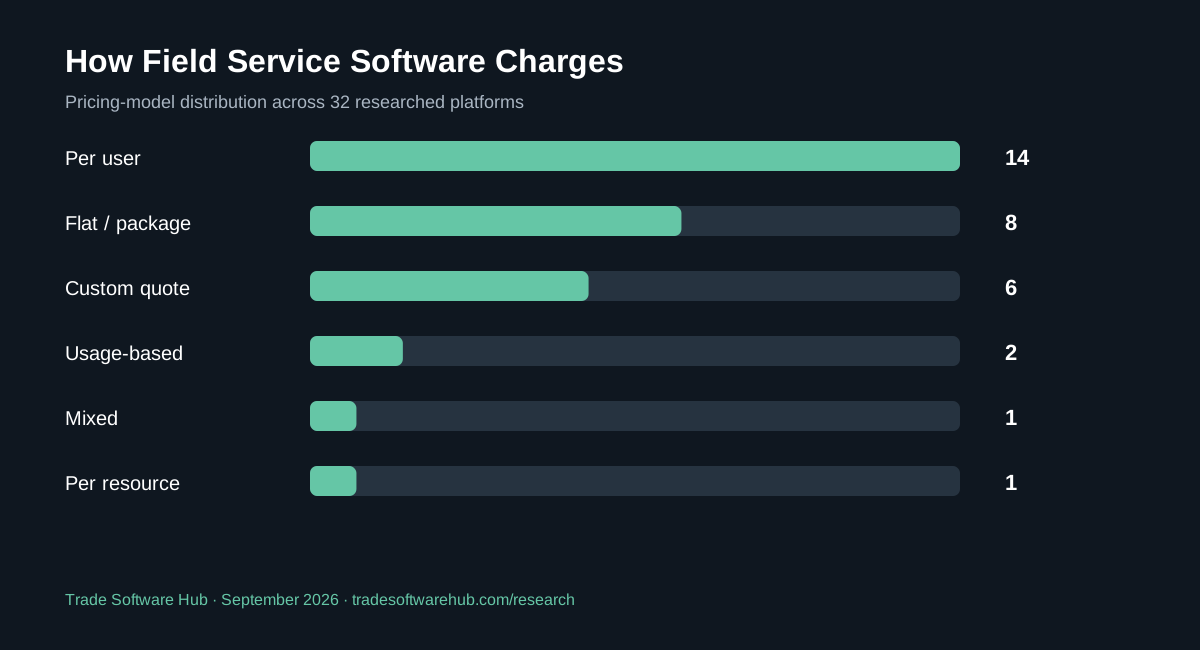
Model distribution
| Pricing model | Platforms | Share |
|---|---|---|
| Per user | 14 | 44% |
| Flat / package | 8 | 25% |
| Custom quote | 6 | 19% |
| Usage-based | 2 | 6% |
| Mixed | 1 | 3% |
| Per resource | 1 | 3% |
What each model means for buyers
Flat or package pricing
A package price can be attractive when several users are included, but the comparison becomes less obvious when higher plans are required for features such as QuickBooks sync, route optimization, automation or reporting.
Per-user pricing
Per-user pricing makes the marginal cost of growth easy to model, but a low starting price can become expensive as technicians, dispatchers and office staff are added. Minimum-seat requirements also matter.
Per-resource pricing
Enterprise field-service systems may license a broader “resource” concept that includes technicians or other schedulable assets. Buyers should confirm exactly what counts toward the license metric.
Usage-based pricing
Some products cap jobs, appointments or other transactions instead of charging primarily by seats. This can be inexpensive for small teams with low job volume and less predictable for high-throughput businesses.
Custom quote pricing
Quote-led pricing is common among larger FSM systems. The absence of public pricing does not imply the product is expensive, but it makes independent cost comparison materially harder before a sales process begins.